


Waking up from surgery with unexpected numbness, tingling, or loss of function can be terrifying. Yes, you can sue a surgeon for nerve damage in Georgia—but only if the injury resulted from medical negligence rather than a known risk of the procedure. Understanding the difference between surgical complications and malpractice is vital to protecting your legal rights.
Georgia law sets strict requirements for filing medical malpractice claims, including tight deadlines and mandatory expert documentation. If you believe your nerve injury was caused by surgical negligence, speaking with a Georgia personal injury lawyer can help you understand your options.
What Causes Nerve Damage During Surgery?
Nerve injuries during surgery can occur through several mechanisms:
- Accidental cutting or severing of nerves – Surgeons may inadvertently cut through a nerve while making incisions or removing tissue, particularly in procedures involving complex anatomy.
- Excessive retraction or stretching – Surgical instruments used to hold tissues aside can place too much pressure on nearby nerves, causing temporary or permanent damage.
- Improper patient positioning – Poor positioning on the operating table can compress nerves for extended periods. This frequently affects the brachial plexus in shoulder and arm surgeries.
- Failure to identify nerve structures – Surgeons must carefully identify and protect vital nerves during procedures. Failure to properly visualize these structures increases injury risk.
- Anesthesia-related complications – Regional anesthesia, such as epidurals or nerve blocks, can directly damage nerves if administered incorrectly.
Certain procedures carry inherent risks of nerve damage even when performed correctly. However, when a surgeon’s carelessness, lack of skill, or failure to follow proper protocols causes preventable harm, that constitutes medical malpractice.

When Is a Surgeon Liable for Nerve Damage in Georgia?
To hold a surgeon accountable for nerve damage in Georgia, you must prove four essential elements of medical malpractice:
Duty of Care
The surgeon owed you a professional duty to provide competent medical treatment. This relationship exists once a physician agrees to treat you.
Breach of Standard of Care
The surgeon failed to meet the accepted standard of care that a reasonably competent surgeon would provide under similar circumstances. In Georgia, this standard is judged against what similarly trained professionals would do in the same situation—not perfection, but reasonable competence.
Causation
The surgeon’s breach directly caused your nerve damage. You must show a clear connection between the substandard care and your specific injury.
Damages
You suffered actual harm—physical injury, financial losses, pain, or disability—as a result of the negligence.
Proving a breach of standard of care requires expert medical testimony. A qualified medical expert must review your case and provide an opinion that the surgeon’s actions fell below acceptable standards. Without this expert support, your case cannot proceed in Georgia courts.
If you are unsure whether your nerve damage qualifies as malpractice, reach out to our attorneys today for a case review.
Georgia’s Medical Malpractice Laws You Must Know
Georgia imposes specific legal requirements that significantly impact your ability to file a medical malpractice claim.
Statute of Limitations in Georgia
Under O.C.G.A. § 9-3-71, you generally have two years from the date of injury to file a medical malpractice lawsuit. However, Georgia also enforces a five-year statute of repose, which serves as an absolute deadline regardless of when you discovered the injury.
The discovery rule allows the two-year clock to start when you knew or should have known about the malpractice—but the five-year repose period begins on the date of the negligent act itself. If you file after five years, your case will be dismissed regardless of when you discovered the harm.
Limited exceptions exist for foreign objects left in the body or fraudulent concealment of malpractice, but these are narrowly applied.
Expert Affidavit Requirement
Georgia law requires you to file an expert affidavit with your complaint. This sworn statement from a qualified medical professional must declare that the defendant’s conduct fell below the standard of care and caused your injury.
Cases are routinely dismissed if the affidavit fails to meet Georgia’s strict requirements. This makes selecting qualified experts and preparing thorough documentation absolutely critical from the start.
Damage Caps
Georgia previously imposed caps on non-economic damages in medical malpractice cases. However, the Georgia Supreme Court struck down these caps as unconstitutional in Atlanta Oculoplastic Surgery v. Nestlehutt (2010). There is currently no limit on the amount of non-economic damages you can recover for pain, suffering, or emotional distress in Georgia medical malpractice cases.
How Do You Prove Surgical Nerve Damage Was Negligence?
Building a successful nerve damage case requires thorough investigation and substantial evidence. Here’s how experienced attorneys establish medical negligence:
Medical Records Review
We obtain and analyze your complete medical records, including pre-operative assessments, surgical notes, anesthesia records, and post-operative care documentation. These records often reveal critical details about what occurred during surgery.
Independent Expert Evaluation
Qualified medical experts review your case to determine whether the surgeon met the standard of care. These specialists compare the surgeon’s actions to accepted medical practices and identify specific failures.
Imaging & Diagnostic Testing
EMG (electromyography) and nerve conduction studies can objectively measure nerve damage severity and help establish when the injury occurred. Imaging like MRI or CT scans may show structural problems that contributed to nerve injury.
Surgical Notes Analysis
Operative reports detail what the surgeon did during your procedure. Experts scrutinize these notes for evidence of technical errors, inadequate visualization of nerve structures, or deviations from proper surgical technique.
An Augusta personal injury lawyer experienced in medical malpractice cases understands how to gather this evidence and present it effectively to insurers, mediators, and juries.
What Compensation Can You Recover?
If you prove that surgical negligence caused your nerve damage, Georgia law allows you to pursue several types of compensation:
| Damage Type | Description |
|---|---|
| Medical Expenses | Past and future costs of treatment, including surgery, physical therapy, medications, and assistive devices |
| Lost Wages | Income you’ve already lost due to recovery time and medical appointments |
| Loss of Earning Capacity | Reduced ability to work in the future if permanent disability limits your career options |
| Pain and Suffering | Physical pain, discomfort, and reduced quality of life caused by the nerve injury |
| Permanent Disability | Compensation for lasting impairment, loss of function, or disfigurement |
| Emotional Distress | Psychological impact, including anxiety, depression, or trauma related to the injury |
The value of nerve damage claims varies significantly based on injury severity, your age and occupation, and how the injury affects your daily life. Permanent nerve damage that ends a career or requires lifelong care typically results in substantially higher compensation.
You should not have to bear the financial burden of a preventable surgical mistake. Contact our lawyers today to discuss pursuing full compensation.
Types of Surgical Procedures Where Nerve Damage May Occur
Nerve injuries can occur across many types of surgery. Understanding common scenarios helps identify when surgical negligence may have played a role:
Orthopedic procedures – Surgeries involving the shoulder, hip, or extremities carry risks of nerve damage if improper patient positioning, excessive traction, or inadequate protection of nerve structures occurs during the procedure.
Dental and oral surgery – Tooth extractions, dental implant placement, and jaw surgery can affect nerves in the face and mouth if proper technique is not followed or if the surgeon fails to properly identify nerve locations.
Spinal surgery – Procedures involving the spine require extreme precision. Failure to properly identify and protect nerve roots during discectomy, fusion, or decompression surgery can result in permanent nerve damage.
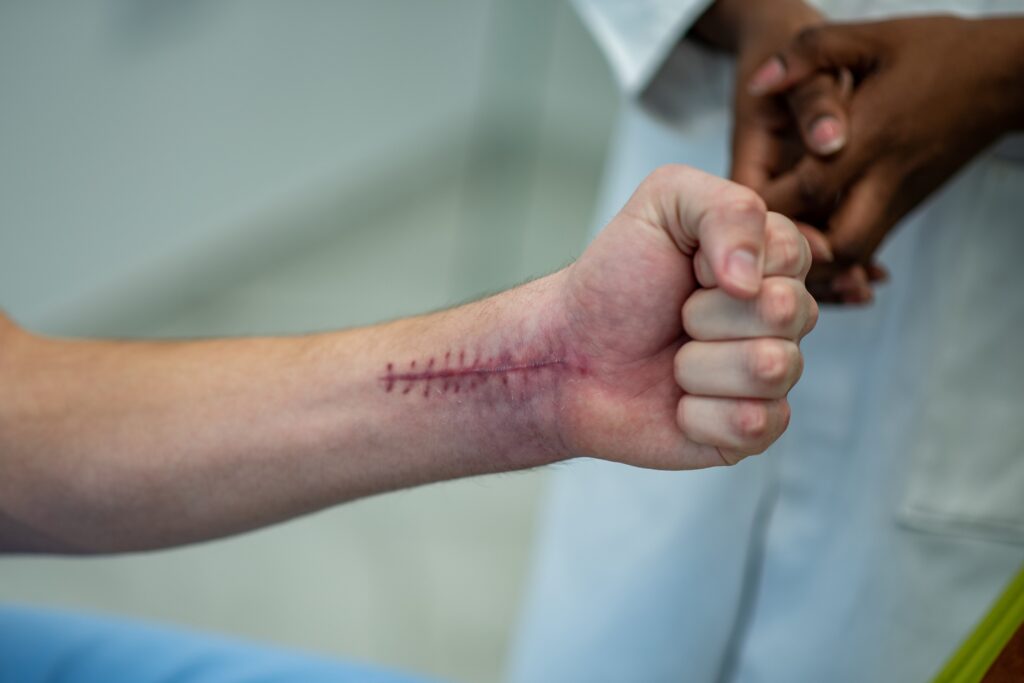
Hand and wrist surgery – Delicate procedures such as carpal tunnel release require careful technique to avoid cutting or damaging the nerves that control hand function.
When surgical errors cause preventable nerve damage in these or other procedures, victims may have grounds for a medical malpractice claim. Understanding typical Georgia nerve damage settlements can help you appreciate the potential value of your case.
What If You Signed a Consent Form?
Many patients worry that signing an informed consent form prevents them from suing for complications. This is not true. Informed consent does NOT protect a surgeon from liability for negligence.
Consent forms acknowledge that you understand the risks of a procedure. They don’t give surgeons permission to perform below the standard of care or make preventable mistakes.
The key distinction is between:
- Known complications: Risks that exist even with proper technique (covered by consent)
- Preventable errors: Mistakes caused by negligence (not protected by consent)
For example, if your consent form warns that nerve damage is a possible risk of spinal surgery, you’ve acknowledged that risk. However, if the surgeon damages your nerve by failing to properly identify anatomical structures or using improper technique, that’s negligence—regardless of what you signed.
How Long Do You Have to File a Lawsuit in Georgia?
Time limits in Georgia medical malpractice cases are unforgiving. Missing a deadline permanently destroys your right to compensation.
Remember the two critical timeframes:
⚖️ Two-year statute of limitations from when you discovered or should have discovered the malpractice
⚖️ Five-year statute of repose from the date of the negligent act
Building a medical malpractice case takes time. We must obtain and review extensive medical records, consult with medical experts, secure the required expert affidavit, conduct thorough legal research, and prepare comprehensive legal filings. Starting early gives us the time needed to build the strongest possible case.
Georgia law places strict deadlines on medical malpractice claims. Waiting too long could permanently bar your case. Get in touch with our firm today.
When Should You Speak to a Lawyer?
You should consult with an attorney if you experience:
✓ Numbness or tingling that lasts longer than expected – Persistent symptoms beyond the typical recovery period may indicate permanent damage.
✓ Loss of motor function or muscle weakness – Inability to move body parts or noticeable weakness suggests significant nerve injury.
✓ Chronic pain that doesn’t improve – Nerve pain often feels like burning, shooting, or stabbing sensations that don’t respond well to typical pain medications.
✓ Your surgeon failed to discuss nerve damage as a possible risk – Lack of informed consent about known risks may strengthen your case.
✓ Medical providers seem evasive about your injury – If doctors avoid answering your questions or provide conflicting explanations, professional guidance can help you understand what really happened.
Early consultation allows us to preserve evidence, interview witnesses while memories are fresh, and ensure we meet all filing deadlines.
FAQ Section
Can nerve damage from surgery be permanent? +
Yes, nerve damage from surgery can be permanent, though outcomes vary. Peripheral nerves sometimes regenerate over months to years, potentially restoring partial or full function. However, complete nerve transection or severe crush injuries often result in permanent loss of sensation or movement. The location of injury, type of nerve affected, and promptness of treatment all influence whether recovery is possible.
Is nerve damage always considered malpractice? +
No, nerve damage is not always malpractice. Many surgical procedures carry inherent risks of nerve injury even when performed correctly. Malpractice occurs only when a surgeon’s negligence—such as failure to follow proper technique, inadequate knowledge of anatomy, or careless instrument use—causes preventable harm. The key question is whether the surgeon met the accepted standard of care.
How much is a nerve damage lawsuit worth in Georgia? +
Nerve damage lawsuit values vary widely based on injury severity, permanence, impact on your life, and strength of evidence. Cases involving minor, temporary nerve damage may settle for tens of thousands of dollars, while permanent disabilities affecting earning capacity and quality of life can result in verdicts or settlements exceeding one million dollars. Each case depends on its unique facts and circumstances.
Do I need an expert witness in Georgia medical malpractice cases? +
Yes, Georgia law requires an expert affidavit from a qualified medical professional to accompany your complaint. This expert must state that the defendant’s conduct fell below the standard of care and caused your injury. Additionally, you’ll need expert testimony at trial to prove your case. Medical malpractice cases cannot proceed without proper expert support.