

Yes. When someone dies because a property was not kept safe, Georgia law can hold the owner or occupier responsible through a wrongful death claim.
These cases live where two laws meet. Premises liability decides whether the owner is at fault, and the Georgia Wrongful Death Act decides who can sue and what the loss is worth.
At Hawk Law Group, we handle these claims across the Central Savannah River Area (CSRA) from five staffed offices. This guide covers the duty a Georgia property owner owes, the one rule that usually decides the case, and why the proof that wins it can vanish in a matter of days.
If your family lost someone because of an unsafe property condition, speak with an Augusta wrongful death lawyer about preserving evidence, identifying every responsible party, and protecting the claim before important deadlines pass.
What counts as a dangerous property condition
A dangerous condition is any physical feature of a property that creates an unreasonable risk of serious harm. Most fatal cases are not exotic — they involve something ordinary that nobody fixed.
The fact patterns we see most often include:
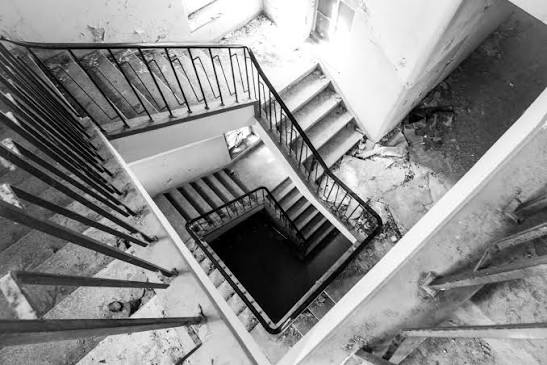
- Fall hazards: unlit stairwells, missing or loose handrails, broken steps, unmarked drop-offs, and standing water on hard floors.
- Structural failures: collapsing balconies, decks, railings, ceilings, and retaining walls.
- Water and pool hazards: unfenced pools, broken gate latches, and missing safety equipment.
- Electrical and mechanical hazards: exposed wiring, faulty wiring in rentals, broken elevators, and malfunctioning gates.
- Fire and exit problems: disabled smoke alarms, blocked exits, and jammed fire doors.
- Security failures: broken exterior locks, dead parking-lot lights, disabled gates, and abandoned security patrols.
Under O.C.G.A. § 51-4-1, a death caused by criminal or other negligence counts as a “homicide” for wrongful death purposes. A death from a neglected hazard fits squarely inside that definition.
The duty a Georgia property owner actually owes
Georgia does not give every visitor the same protection. The duty you were owed depends on why you were on the property — and that one fact often decides the whole case.
Visitor status · The classification that decides the case
Georgia does not give every visitor the same protection. The duty your loved one was owed depends on why they were on the property, and that one fact often decides the whole case.
Highest protection
Invitee
O.C.G.A. § 51-3-1
Duty the owner owes Ordinary care to keep the premises and approaches safe.
Who usually fits Customers, tenants, apartment and hotel guests, delivery drivers, contractors.
Limited protection
Licensee
O.C.G.A. § 51-3-2
Duty the owner owes Only to avoid willful or wanton injury.
Who usually fits A social guest at a private home.
Least protection
Trespasser
No permission to be there
Duty the owner owes Only to avoid willfully injuring them, with limited protection for children drawn by an attraction.
Who usually fits Someone on the property without permission.
Most fatal cases turn on what these two phrases in § 51-3-1 actually cover.
“Approaches”
Reaches past the building to parking lots, walkways, and entrances.
“Ordinary care”
Means reasonable care, not a promise that nothing bad can happen.
The gap between an invitee and a licensee is enormous. Two people can die from the exact same hazard and get completely different outcomes based on this one classification.
An Augusta premises liability lawyer can evaluate the visitor’s legal status, the owner’s duty, and whether the property owner knew or should have known about the dangerous condition.
Why the “superior knowledge” rule usually decides the case
Georgia law turns most of these cases on a single comparison. Under the superior knowledge rule from Robinson v. Kroger Co., 268 Ga. 735 (1997), the family must show the owner knew more about the hazard than the person who died did.
The rule has two halves. The family proves the owner knew or should have known about the danger, and the defense argues the victim knew about it too — or should have seen it.
In an ordinary injury case, the injured person answers that argument themselves. They describe the bad lighting, what they were carrying, and what they simply could not see.
In a death case, that witness is gone. The defense is free to build a story about what the person “must have noticed,” and no one is left to say otherwise.
This is the quiet problem at the heart of every fatal premises case. It is also why these claims are won with documents, not testimony.
Here is the part that surprises families: owner knowledge is built, not found. No management company will ever sit in a deposition and admit it knew a stairwell was dangerous — they all remember the same convenient nothing.
Instead, the case gets assembled one sworn witness at a time.
Hypothetical scenario: An apartment stairwell where the third-floor light has been out for weeks. The maintenance tech who wrote the work order, the leasing agent who logged the third complaint, and the night crew that kept a flashlight by the door can each testify to what the office already knew. The more voices confirm it, the harder “we had no idea” is to sell to a jury.
The evidence that speaks for the person who can’t
When the person who died cannot describe what they saw, the case is built from the owner’s own records. Those records show what the owner knew and exactly when they knew it.
The proof we go after includes:
- Prior complaints: tenant and customer reports, emails, and texts about the same hazard before the death.
- Maintenance and inspection logs: sweep sheets and checklists that show whether required checks ever happened.
- Work orders and repair records: requests that were submitted, delayed, closed without action, or reopened again and again.
- Incident reports: earlier falls, injuries, or security events at the same spot.
- Surveillance footage: video of the incident and of the days before it, showing how long the hazard sat there.
- Code enforcement records: citations and violation notices from local building or fire authorities.
A delayed work order is often the single most valuable page in the file. It can prove the owner knew, in the owner’s own records, which is why we look for it first.
Expect a fight over defenses, too. Georgia owners often argue the hazard was “open and obvious” or a harmless “static” condition the person had already passed safely — and both arguments fall apart with proof about lighting, sight lines, distraction, and whether the person had ever met that hazard before.
Signed paperwork gets used the same way. A lease addendum or a pool-rules form is waved around by the defense as the end of the discussion, and we treat it as the start of the analysis.
A clearly written release might hold up for an honest mistake. But a signature is not a free pass for conduct that showed the owner did not care whether someone got hurt — and it only reaches as far as its own words, so fine print signed for one thing may not touch a death that came from something else.
We can review what records still exist in your family’s case. Call (706) 539-5191 or reach us through our contact page.
Negligent security deaths and Georgia’s new 2025 law
Some property deaths are caused by a person, not a hazard. A fatal shooting or assault at an apartment complex, parking deck, hotel, or bar can support a negligent security claim against the property owner.
Georgia rewrote this area of law in 2025. Senate Bill 68 created a brand-new set of statutes — O.C.G.A. §§ 51-3-50 through 51-3-57 — and they apply only to cases arising on or after April 21, 2025.
The bottom line: the date on the incident report now decides which law your family’s case lives under. Two nearly identical deaths can be judged by two different rulebooks depending on which side of that date they fall.
Negligent Security · Senate Bill 68
Georgia rewrote this area of law in 2025. Senate Bill 68 created O.C.G.A. §§ 51-3-50 through 51-3-57, and they apply only to cases arising on or after April 21, 2025.
All five elements, plus any applicable statutory exclusions.
01
A qualifying basis for foreseeability
02
A foreseeable injury
03
Exploitation of a specific known physical condition
04
Failure to use ordinary care to remedy or mitigate it
05
Proximate causation
For a licensee under § 51-3-52, the bar is higher still, and only the particularized-warning path is open.
Plainly put, the new law raised the bar. These claims are still very much alive, but they demand faster, more disciplined investigation than they did a year ago. You can read the bill on the Georgia General Assembly’s official site.
More than one party may be on the hook
A single address usually hides several parties with duties — and several insurance policies. Finding all of them early can change what your family can actually recover.
The possible defendants include:
- The property owner: the entity on the deed, which is often a limited liability company rather than a person.
- The landlord: in a rental, the party responsible for common areas, structure, and agreed repairs.
- The property management company: the one that actually took the complaints, scheduled repairs, and held the maintenance budget.
- A commercial tenant: the business that controlled the space where the hazard sat.
- Contractors and vendors: security firms, janitorial crews, and elevator or maintenance companies working under contract.
Here is the reframe that matters. Blame and collectibility are two different questions, and we ask both.
Property ownership, control, contractual duties, and insurance arrangements vary. We investigate which entities controlled the area, received complaints, or had responsibility for repairs.
We identify potentially responsible parties early and use formal discovery, including permitted nonparty discovery, to determine who should remain in the case. The two-year filing clock continues to run while those questions are investigated.
We can identify the responsible parties and the coverage behind them. Call (706) 539-5191 or use our contact page.
Evidence disappears faster than families expect
Surveillance systems at stores and apartment complexes may record over their own footage within days. An owner’s duty to preserve evidence can arise when litigation is reasonably foreseeable, even without a formal demand. A prompt written preservation notice can help document that duty and identify the evidence that must be retained.
The hazard itself is temporary, too. A broken step gets replaced, a dead light gets swapped, and a faulty gate gets fixed within a week of a death.
The repair is the part nobody sees coming. Fixing the danger is the right thing to do — and it also erases the proof, because no one can measure the broken step once it is gone.
Here is what most people get backwards: the filing deadline is not the urgent part. Tolling rules can stretch the time to file without saving a single record, so the real clock is the evidence quietly rotting away.
A written preservation demand is the first move that actually matters. It has to name the footage, the maintenance and inspection records, the incident reports, and the vendor files — and it has to go out before the retention window closes.
What a life is worth — damages, shared fault, and the deadline
Georgia measures a wrongful death claim as the “full value of the life” of the person who died under O.C.G.A. § 51-4-1. That is not the value of the death — it is the value of the whole future that was erased.
Reframe the question. Not “what was the death worth,” but “what was the life worth.” We are claiming the birthdays, the phone calls, and the person at forty and at sixty — not just the paychecks that stopped.
There are also separate estate claims. Under O.C.G.A. § 51-4-5(b), the personal representative may recover funeral, medical, and other necessary expenses resulting from the injury and death. A separate survival claim under O.C.G.A. § 9-2-41 may allow the estate to recover for conscious pain and suffering before death when supported by evidence.
An Augusta wrongful death attorney can help determine which damages belong to the family’s wrongful death claim and which separate claims must be pursued through the estate.
Two categories of recovery, two purposes:
- The wrongful death claim: the full value of the life, brought by the family.
- The estate claims: funeral, medical, and other necessary expenses under § 51-4-5(b), along with any surviving personal injury claim under § 9-2-41.
The intangible value of a life is exactly the piece insurers fight hardest to shrink, because it is the hardest to reduce to a number. Expect that fight.
Now the hard part — shared fault. Under O.C.G.A. § 51-12-33, the award is cut by the victim’s share of the blame, and subsection (g) bars recovery entirely if the victim is found 50 percent or more at fault.
That 50 percent line is where the defense spends its energy, and in a fatal premises case it is the same argument as superior knowledge. “He walked that way every day, he should have seen it” works as both a knowledge defense and a fault percentage — and the one person who could answer it is gone.
Just under the line, a family recovers in proportion. At the line, it recovers nothing. So we build the record for that fight from week one, documenting lighting, sight lines, and the person’s actual path before anyone can repair or repave it.
Fault is also apportioned, so each defendant pays only its own share. That makes finding every responsible party a money issue, not just a paperwork one.
As for the deadline: the general limit is two years from the date of death under O.C.G.A. § 9-3-33. If a criminal case comes out of the same event, § 9-3-99 can pause that clock until the prosecution ends, up to six years — and if a government entity owns the property, much shorter notice deadlines apply.
What we watch for in the first weeks
Most of what decides a property death case happens before a family ever calls a lawyer. Here is what we look for right away:
- Evidence on a delete timer: cameras record over on short cycles, and the hazard is often repaired within days. Our first step is a preservation demand naming the video, the work orders, the sweep sheets, and the vendor files.
- The friendly early phone call: when an adjuster calls a few days later wanting to “get this resolved quickly,” that is not customer service — it is a trained professional building a record. A recorded statement can hurt an honest family, because you do not yet know the full scope of what you lost.
- Employees who quietly knew: the people who reported the hazard are usually still on the payroll in the first months, and they are how notice gets proven. Turnover moves them out of reach, so we find them early.
- Social media, including relatives’ accounts: on a serious case, spending a little to find one damaging photo is an easy business decision for an insurer. Do not delete old posts, since removing them can become its own problem — instead, stop posting about the loss and tell us what is already out there.
One more point on that last one. Locking your profile is not enough — investigators go to a spouse’s page, a child’s account, or anyone who might tag you, and platforms answer subpoenas with the content and the timestamps.
We can start the preservation work while the records still exist. Call (706) 539-5191 or use our contact page.
Representative results
We handle wrongful death and catastrophic injury cases on a contingency fee basis, and our attorneys carry more than 71 years of combined experience. Representative results listed in our case-results materials include:
| Result | Case type |
|---|---|
| $3,300,000 | Wrongful death |
| $1,850,000 | Wrongful death |
| $1,500,000 | Catastrophic injury |
| $1,200,000 | Motor vehicle collision |
| $975,000 | Wrongful death |
| $850,000 | Wrongful death |
Every case is different, and past results do not guarantee a future outcome. See more on our case results page.
How our team can help
These cases are won by reaching the records before they are altered, replaced, or recorded over. That means a preservation demand, a site inspection, and a full list of every owner, occupier, and contractor tied to the property.
Our attorneys at Hawk Law Group bring more than 71 years of combined experience to wrongful death and premises liability claims, and we bring in medical, forensic, and reconstruction experts when a case calls for it. We work on a contingency fee basis, so there is no upfront cost and no fee unless we win.
Call (706) 539-5191 or reach us through our contact page. Our phones are answered 24 hours a day, and we offer home and hospital visits.
Frequently asked questions
Can we sue a store or apartment complex after a fatal fall? +
Yes, if the hazard was one the owner or occupier knew about or should have found through ordinary care. A customer or tenant is generally an invitee, protected by O.C.G.A. § 51-3-1.
What do we actually have to prove? +
That the owner owed a duty, that a dangerous condition existed, that the owner's knowledge of it was greater than the victim's, that the condition caused the death, and the resulting damages. The knowledge comparison from Robinson v. Kroger Co. is usually the contested piece.
What if the hazard was obvious? +
Georgia owners argue this constantly, but it is not automatic. Poor lighting, a sudden change in the condition, a fair distraction, or a first-time encounter with the hazard can all defeat the "open and obvious" defense.
Can a landlord be responsible for a tenant's death? +
It depends on control and on what the landlord agreed to maintain. Common areas, structural parts, and repairs the landlord took on are the usual points of exposure, and a management company may share the blame.
Is a fatal shooting on someone's property a premises case? +
It can be, as a negligent security claim. For deaths on or after April 21, 2025, §§ 51-3-50 through 51-3-57 apply, and the family must tie the crime to a specific physical condition the owner knew about and failed to fix.
The owner repaired the hazard right after — does that hurt our case? +
Not by itself, but it raises the urgency. The repair removes the physical proof, so the case shifts onto the owner's paperwork — the work order that authorized the fix, the invoice, and the complaints that came in first.
How fast do we need to act to save security footage? +
Immediately. Many systems record over within days, so a written preservation demand should go out as early as possible.