
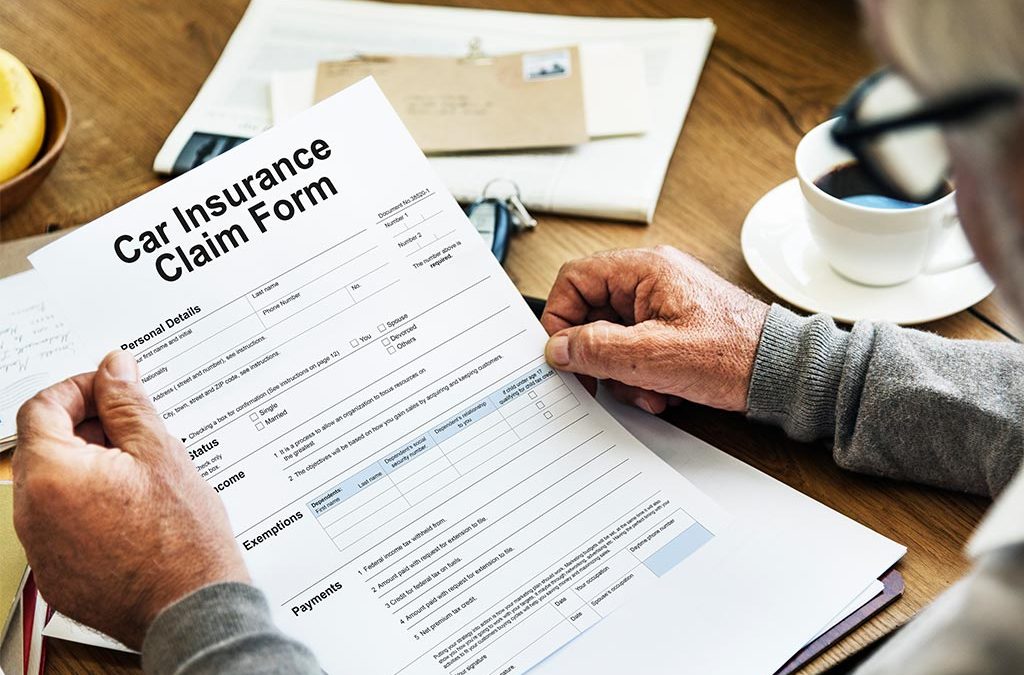
It is difficult to pursue the other driver’s insurance when you cannot identify the policy.
The other driver may leave the scene without sharing information, provide incomplete details, or insist they have no coverage. But their answer may not be the only information available. The crash report, information exchanged at the scene, and follow-up with the driver, vehicle owner, or identified insurers may help clarify whether coverage exists. Depending on the facts, the investigation may also consider whether a policy connected to the vehicle’s owner or use could apply.
If the other driver’s insurance status is unclear, contact our Thomson car accident lawyers for a free consultation. We can review the available crash information and investigate which insurance policies, if any, may apply.
Duty to Disclose Insurance Information
Georgia requires all registered vehicle owners to insure their vehicles. The minimum coverages required by state law are:
- $25,000 per person and $50,000 per accident in bodily injury liability
- $25,000 per accident in property damage liability
Those are legal minimums — not estimates of what serious injuries cost. Serious injuries can quickly exhaust the per-person minimum before rehabilitation, lost wages, or long-term care are even addressed. Knowing what coverage exists is the first step. Knowing what it actually covers — and what it doesn’t — is the next one.
Failure to maintain insurance can result in suspension of the vehicle’s registration. Driving without insurance can result in suspension of your driver’s license.
Two laws that work in your favor at the scene
Georgia has two statutes that give you the right to the other driver’s insurance information after an accident.
The first requires every driver to carry proof of insurance at all times and present it to law enforcement on request.
The second requires law enforcement officers at the scene to instruct drivers to exchange insurance information with each other.
That gives you two practical paths to the information you need.
Ask the Other Driver
After the officer has instructed both parties to exchange information, ask the other driver directly for their insurance details. If they refuse, report the refusal to the officer. Most officers will obtain the information themselves and provide it to you — which also removes any risk of confrontation at the scene.
Get It from the Accident Report
The investigating officer collects insurance information from all drivers while preparing the accident report. You can obtain the other driver’s carrier and policy information directly from that report.
In Georgia, accident reports are accessible electronically through the Georgia Department of Transportation website five to seven days after the accident.
What to do once you have the information — and what to watch for
The driver’s name and policy number are the starting point, not the finish line. The driver is the name on the paperwork. The insurance company is who hired the attorney, who controls every settlement decision, and who writes the check. That’s who you’re actually dealing with once contact is made.
When you reach out to the carrier — or when they reach out to you, which can happen within days of the accident — that first interaction matters. The adjuster who calls sounding helpful and saying they want to get this resolved quickly is a trained professional opening a file and documenting everything you say before you know the full extent of what happened. Anything minimized in that first conversation becomes a reference point the carrier returns to for the life of the claim.
It’s also worth knowing that the other driver’s policy may not be the only source of coverage. Depending on how the accident happened — whether a commercial vehicle was involved, whether the driver was working at the time, whether road conditions or a third party contributed — there may be additional parties with coverage that applies. Experienced attorneys typically identify all potentially applicable coverage sources early — to avoid discovering months in that a significant source was never pursued.
If the other driver has no insurance or insufficient coverage, your own uninsured/underinsured motorist coverage becomes the relevant source — and in Georgia, where drivers who carry only the legal minimum are more common than most people expect, that coverage matters more than most people realize when they originally bought their policy.
Investigating Someone’s Insurance Status
Sometimes the exchange of information doesn’t happen. The other driver fled. You were unconscious at the scene. Someone hit your parked car while you were inside a building. In these situations the obvious path — ask the driver, get the report — isn’t available. What follows are the tools that are.
Use Georgia’s E-Services Website
Georgia’s Motor Vehicles Division allows you to check the insurance status of a vehicle online using either the license plate number or the VIN. If you have partial information — a plate captured on a security camera, a number written down by a witness — this is often the fastest starting point.
Security footage gets written over. Witnesses move on. The license plate lead that exists today gets harder to act on every week that passes.
Why reporting hit-and-run accidents immediately matters
A hit-and-run is a crime in Georgia. Reporting it immediately serves two purposes: it creates an official record, and it gives law enforcement the best chance of identifying the driver while the trail is still warm.
If the driver is identified, their license plate number can be used to check insurance status through the E-Services portal. If they’re never identified, the clock on your claim is still running — which makes early reporting and documentation more important, not less.
Understand what your own insurer is doing and why
If you have uninsured motorist coverage, your insurer is required to pay your damages when the at-fault driver can’t be identified or has no coverage. That sounds straightforward. Here’s the part worth understanding: your insurer may actively work to identify the other driver specifically so it can avoid being responsible for your claim.
The same structural reality applies here as with any carrier. Your own insurer has a financial interest in minimizing what it pays out — not because anyone is acting in bad faith, but because that’s how insurance companies are built. Knowing that changes how you approach the relationship when you file a UM/UIM claim.
When the obvious defendant isn’t findable — focus on who can actually pay
Hit-and-run and unknown driver scenarios are a version of a problem that runs through every case in this practice: the person most responsible for what happened isn’t always the one who can answer for it.
In these situations the question isn’t really “who did this” — it’s “who can actually pay.” That usually points to your own UM/UIM coverage, and sometimes to other parties whose negligence contributed to the conditions that made the accident possible. A commercial vehicle involved in the area. A property owner. A road maintenance failure. Experienced attorneys typically file wide and identify every potentially responsible party early — to avoid discovering months in that the only viable source of recovery was never pursued.
What a lawyer can do that you can’t
If you only have a name, a partial description, or a vague vehicle identification, an attorney’s investigator has tools for tracking down a driver that aren’t available to the public. If you file a lawsuit against the other driver — even before they’re fully identified — they become legally required to disclose their insurance information during the discovery process. That obligation doesn’t exist until there’s a lawsuit.
The two-year statute of limitations applies here the same as anywhere else. But in hit-and-run cases, time has a second problem: the longer a driver goes unidentified, the harder identification becomes. Evidence disappears. Witnesses forget. Camera footage is overwritten. The window for building the case that gets you to the lawsuit that triggers the disclosure obligation — that window is open now.
Contact the Car Accident Lawyers In the Central Savannah River Area at Hawk Law Group for Legal Assistance Today
For more information, please contact the car accident lawyers at Hawk Law Group at our nearest location to schedule a free consultation today.
We serve throughout the Central Savannah River Area and its surrounding areas:
Hawk Law Group – Augusta, GA
338 Telfair St, Augusta, GA 30901, United States
(706) 722-3500
Hawk Law Group – Evans, GA
4384 River Watch Pkwy, Evans, GA 30809, United States
(706) 863-6500
Hawk Law Group – Thomson, GA
146 Railroad St A, Thomson, GA 30824, United States
(706) 361-0350
Hawk Law Group – Waynesboro, GA
827 Liberty St, Waynesboro, GA 30830, United States
(706) 437-9122
Hawk Law Group – Aiken County, SC
156 Laurens St NW, Aiken, SC 29801, United States
(803) 226-9089
We also serve in Edgefield County, SC.